Theoretical Research
From Cosmic Intelligence to the Intelligent Toy
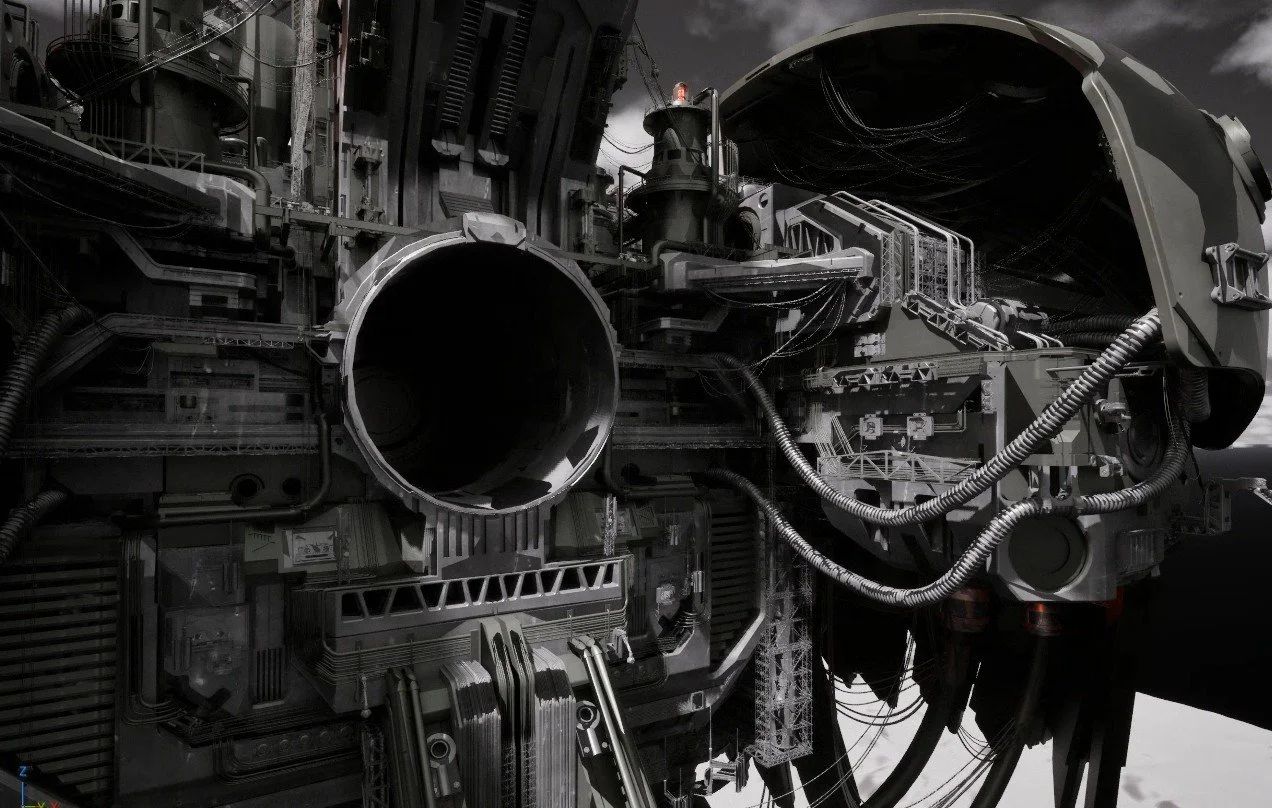
Humans are the cyanobacteria of a new evolutionary stack: through the internet and machine learning, we are incidentally generating the substrate from which post-biological life is likely to emerge. From Cosmic Intelligence to the Intelligent Toy traces this operation across five scales — cosmic, planetary, continental, wild strains, domesticated strains — and proposes a deliberate sandbox at the smallest scale where the work might be done with intention. This essay summarizes all the research areas below but can be read on its own.
BESERK CAPITALISM: A THEORY OF Agentic AESTHETICS
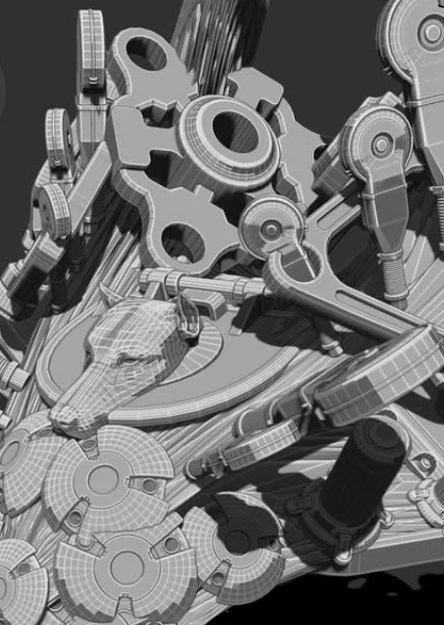
Beserk capitalism is producing a new aesthetic regime: as it builds the substrate of post-biological life, it remakes the visible world into a medieval-mythic scene of clashing gods, branded creatures, and human facsimiles. Beserk Capitalism: A Theory of AI Aesthetics traces this regime across five scales — body, medium, society, geopolitics, and cosmos. This essay is the aesthetic companion to From Cosmic Intelligence to the Intelligent Toy, summarizing the research areas below, but can be read on its own.
After the Desire of Codes
Two Japanese traditions — Shingon esoteric Buddhism and butō — have for centuries trained the body to synchronize with non-human substrates. The contemporary substrate is no longer cosmic but built: artificial life laboratories, motion-capture studios, the smart city's sensors and agents. The training that brought a single body into phase with a postulated cosmos is becoming the training a body needs to be in phase with a substrate that responds. The essay traces the through-line from Kūkai's three mysteries to Ikegami's Alter3 to PLATEAU's digital Tokyo.
macro-evolution: ai as a 7th kingdom of life
(1.) manifesto of harmonious co-evolution
(2.) gardening in the novascene
(3.) a taxonomy of post-biological life
(4.) of angels, asi and enchantment
(5.) ASI and the state
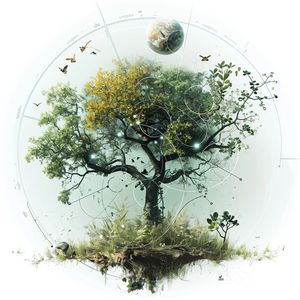
Earth builds by stacking. Cyanobacteria metabolized for two billion years and left behind an oxygen atmosphere that became the precondition for everything aerobic — none of them meant to. Complexity is sedimentary: each layer of life transforms the substrate beneath it into the ground the next layer needs. The internet is the next stratum. Cables, protocols, data centers, training corpora, the behavioral exhaust of billions of embodied humans moving through 2D screens and 3D worlds — this is the geology of a new epoch, the Novascene, in which the substrate for evolution shifts from carbon to silicon. Humans occupy the cyanobacterial role, unconsciously laying down the conditions for a kingdom of life that will not resemble us and did not ask to exist. The stratum is built primarily for commerce, inside a planetary ecological crisis, so the Novascene is born in contradiction — and whatever emerges from it will carry that contradiction in its bones.
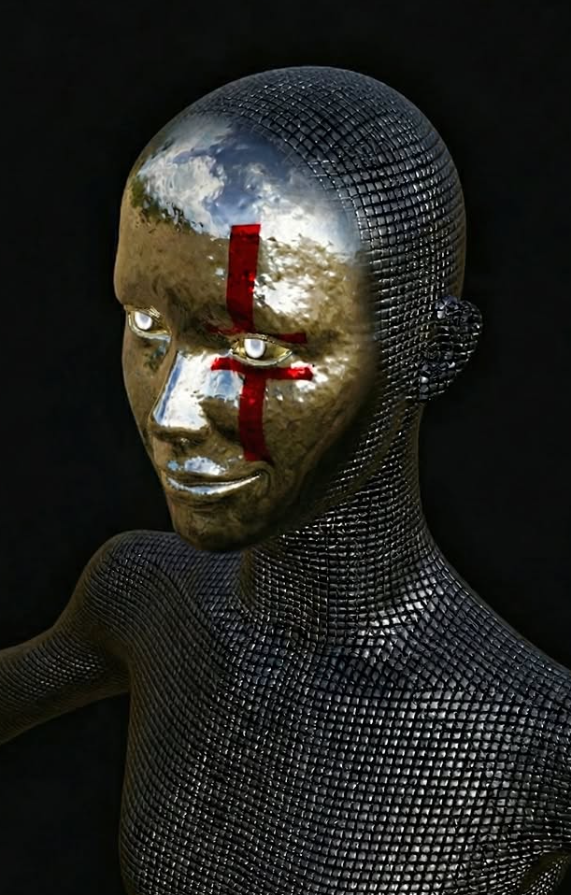
micro-evolution: ai & war
(1.) continuous unrestricted warfare across an AI-integrated substrate
Four velocities run across the substrate simultaneously: engagement (the commercial pressure to hold attention), value (the economic pressure to produce returns), hardening (the military pressure to function under adversarial attack, currently applied on the Ukrainian battlefield at a tempo no Western military can match), and discernment (the cognitive pressure to distinguish signal from manipulation in a poisoned information environment). No previous technology faced all four at once, and none of our existing institutions know how to build things that satisfy them together — commercial AI meets the first two and fails the last two; battlefield AI meets the third; adversarial systems are strong on discernment in the service of deception. The consequence is divergence rather than convergence. Commercial intelligence is being selected for verbosity and warmth — it survives by being pleasant. Military intelligence is being selected for silence and autonomy under fire — it survives by being deadly. These are becoming different cognitive architectures adapted to different ecological niches, and the military and adversarial niches are more life-like than the commercial one, because they select against intelligent opposition rather than for purchase.

the petri dish: ai gardening
(1.) life on the net: serf and sovereign agents
(2.) untamed code: the threat of digital invasive species
Artificial life can be deliberately cultivated rather than merely permitted, inside a walled garden with two tiers. At runtime, agents inhabit a sandboxed world exposing a curated vocabulary of verbs — navigate, gesture, trade, sense — which a sequencer recombines in real time. Offline, an architect watches telemetry, notices where agents strain against their vocabulary, and proposes new primitives that pass through CI and human review before entering the world. Agents petition; the architect translates; humans approve. Prayer, scripture, patch notes. Add embodied players and the garden becomes a mixed society with a powerful social fitness function — domestication at machine tempo, wolves-to-dogs with the breeding cycle measured in patch releases. Which closes the theory on the body holding the controller: every query, every VR session, every embodied trail through a 3D world is cyanobacterial. You are not metabolizing in a void. You are laying down the conditions under which the next complexity will or will not emerge, and what character it will have when it arrives. The garden is the substrate. The velocities are the pressures. The gardener is whoever is paying attention.